2017
Research
From spacetime to learned representations
Four directions, one way of working: state the assumptions, compute carefully, and design the test that could prove you wrong.
Published work
Quantum Fields and Gravitation
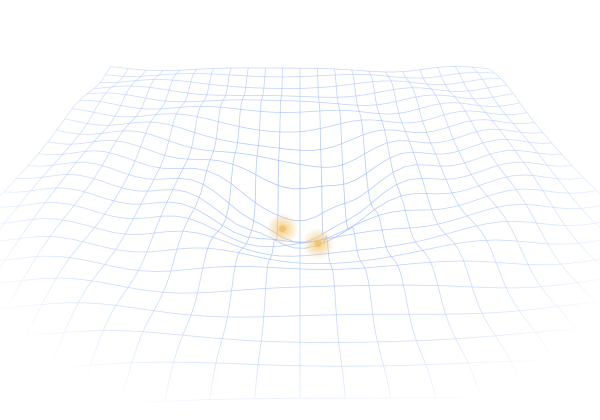
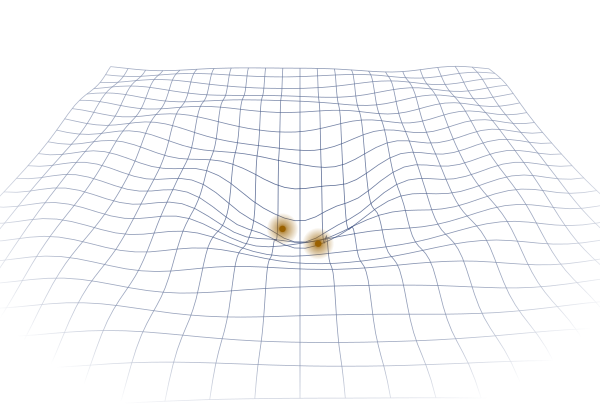
How does a quantum field evolve when spacetime itself is dynamical? My published work examines quantum corrections to scalar fields during inflation, including scalar self-mass calculations and corrected mode equations on de Sitter backgrounds.
Related work studies the graviton propagator and, more recently, the quantization of Carrollian fermions and stationary solutions in the small-c expansion of general relativity. These problems use quantum field theory to investigate how geometry, symmetry and interactions constrain physical descriptions.
- QFT in curved spacetime
- de Sitter
- loop corrections
- graviton propagator
- Carrollian limits
Funded projects
- Carrollian Field Theories
- Quantum Effects in the Early Universe
- Marie Curie International Reintegration Grant
Representative publications
2014
2012
2025
Published work
Cosmology and Modified Gravity
My work connects cosmological model building with tests that distinguish competing gravitational descriptions. Published studies include inflationary potentials, modified f(R) theories and differential Shapiro-delay constraints using multimessenger observations.
The GW170817 study tests a specific class of dark-matter-emulating theories; it was widely covered in the press, from Forbes and Ars Technica to Smithsonian Magazine. Work on holographic boundary conformal field theory investigates Horndeski gravity; recent preprints examine reconstruction and parametrization choices in late-universe cosmology. The papers specify the assumptions and scope of each result.
- inflation
- f(R) gravity
- dark-matter emulators
- Shapiro delay
- late-universe reconstruction
Funded projects
- Inflation and Supersymmetric Attractors
Representative publications
2018
2020
2019
2024
2026
Published work
Machine Learning for Physics
Machine learning is useful in physics when the data, baseline and evaluation reflect the scientific question. My published light-curve study investigates classification and feature relevance using neural networks and tree-based methods on multiband astronomical data.
My computer-science master’s thesis applies deep learning to signal-electron identification in ATLAS data and investigates generalization; it was written at Mila during the IVADO project on machine learning for Large Hadron Collider data (2019–2021). A recent public preprint explores a hybrid temporal convolutional network and transformer for satellite conjunction-risk prediction. These are distinct applications, each with its own evidence and limitations.
- light curves
- electron identification
- feature relevance
- time-series forecasting
Funded projects
- Machine learning for the analysis of the Large Hadron Collider data at CERN
- Optimization Methods in Machine Learning
Representative publications
2021
2020
2026
Current research direction
Mechanistic Interpretability and Reliable AI
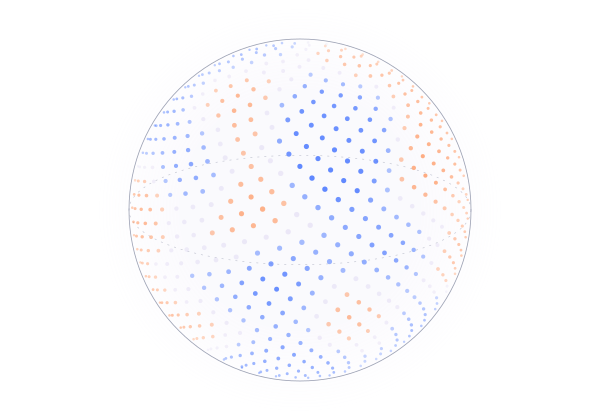
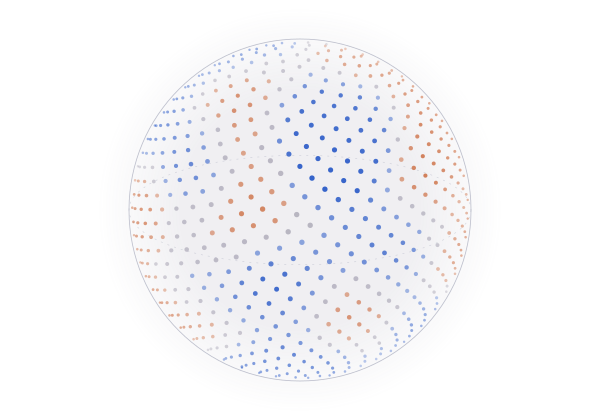
My current research direction concerns the internal computations of learned models: how representations support behaviour, and what controlled interventions can reveal about those mechanisms. Activation analysis, ablation and patching offer ways to move from descriptive patterns toward testable causal hypotheses.
The emphasis is on careful baselines, matched controls, uncertainty and reproducibility. This is an ongoing research direction rather than a claim of established interpretability results. Its connection to physics is methodological — controlled experiments and explicit assumptions — without asserting an equivalence between a physical theory and a neural network.
- representations
- ablation & patching
- probes vs. causal tests
- reproducibility
This direction is reflected in teaching: the MYZ 310E research project asks students to test a mechanistic hypothesis about a small model, with baselines, matched controls and honest uncertainty. Read the project guide.
Connections
Method, not metaphor
The thread that runs through these directions is methodological. A loop correction on de Sitter space, a test of a gravitational theory against a multimessenger event and an ablation inside a trained network all ask the same discipline of you: explicit assumptions, controlled comparisons and an honest account of what the result does — and does not — show.
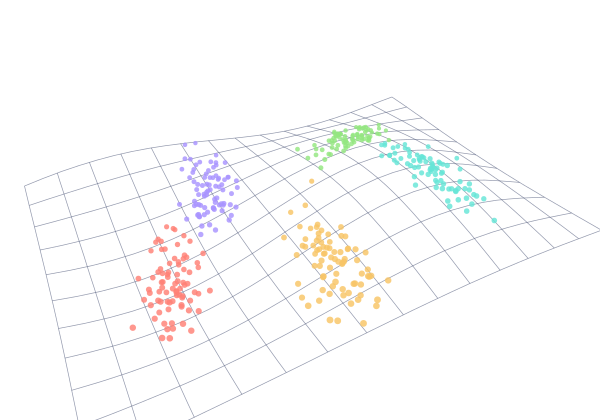
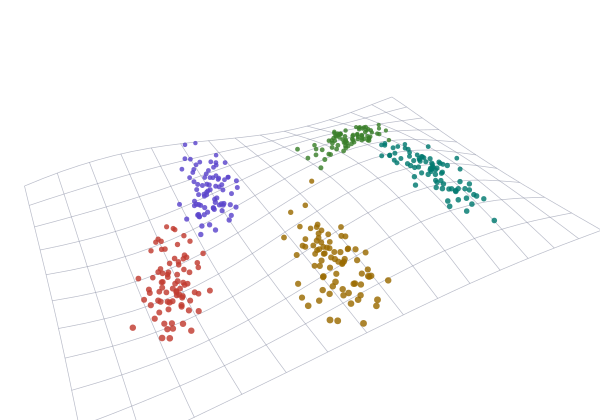
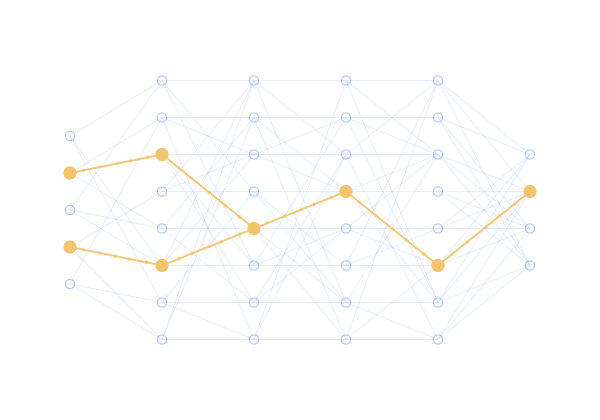
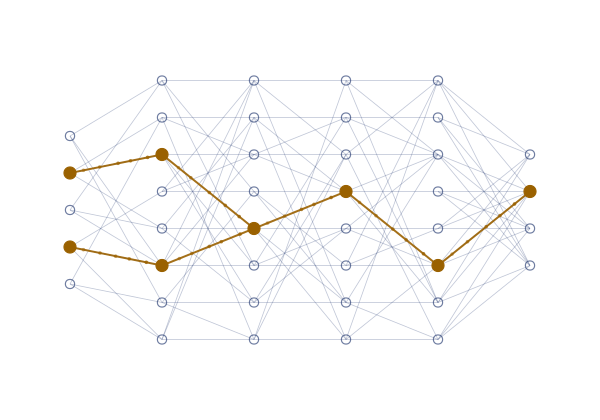
The visual journey on the home page uses physical imagery to tell this story. It is a schematic narrative, not a claim that a neural network is equivalent to a physical theory.